News

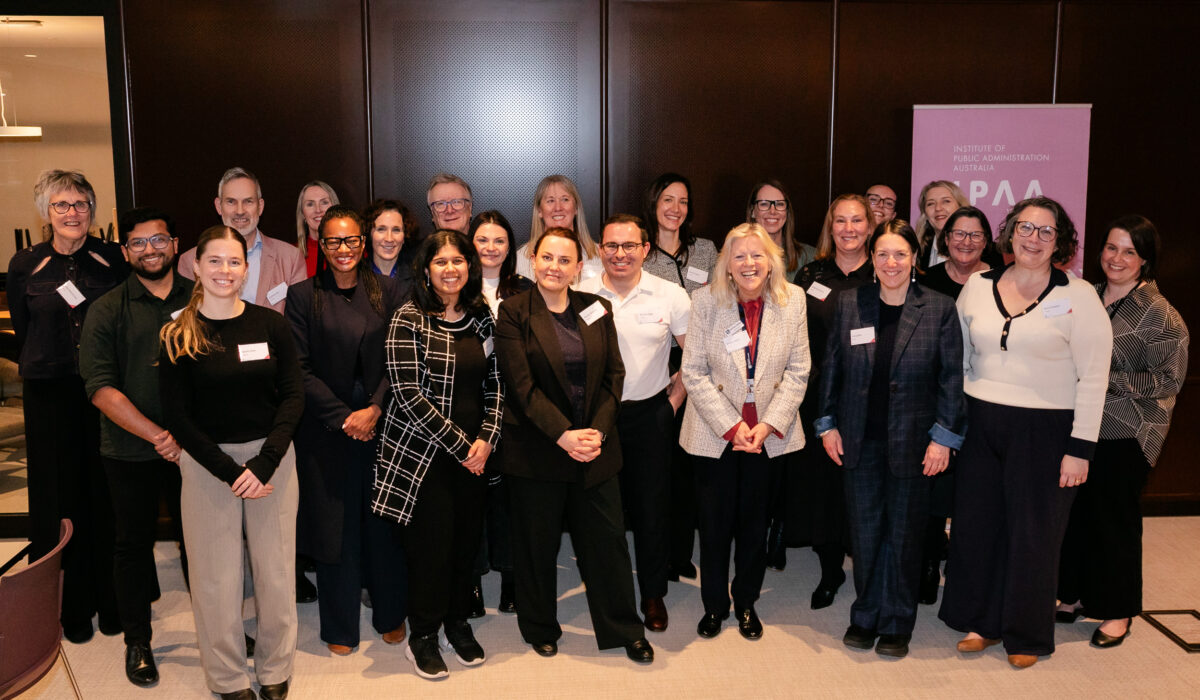
IPAA Victoria announces 2026 Victorian Fellows, National Fellow and First Peoples Leader Scholarship recipient
28 Sep 2026
A challenge for the Victorian Public Service is how professional work can deliver results and strengthen wellbeing, support carers, and build a more inclusive and sustainable workforce.
Job-sharing is one of the approaches gaining momentum across the public sector, offering a pathway into, or through, executive leadership without sacrificing wellbeing, ambition or performance. Although still rare at executive level, for many senior professionals, including parents, carers, people studying or those transitioning into semiretirement, job-sharing provides a viable alternative to the traditional fulltime model. It creates access to leadership while retaining the depth of capability organisations rely on.
We spoke with the Victorian Environmental Water Holder CEO Dr Sarina Loo about how her former ‘top-sharing’ arrangement reshaped her leadership practice, strengthened organisational performance and offered a real alternative to the traditional full-time executive role. Although Sarina hasn’t job-shared for two years, she reflects on how valuable the arrangement was when her children were young and how grateful she is to the Victorian Environmental Water Holder for enabling that flexibility when she needed it most. Now, with her children older and her job-share partner moving on, Sarina has returned to full-time work, but the experience continues to influence her views on leadership and workforce transformation.

How did your Co-CEO arrangement come to be?
The Commission of the Victorian Environmental Water Holder was instrumental in supporting an executive level job-share arrangement. When I applied for the role, I was frank that I could only do it in a part-time capacity as I was returning from maternity leave. It was the innovative mindset of the Chairperson to design a job-share and see the value in the arrangement to the organisation. Leadership and an open mindset from the top are essential to success.
Job-sharing was invaluable during that stage of life. It allowed me to continue contributing at a strategic level without compromising my family commitments. That flexibility was critical; it kept me in the workforce and in leadership for career continuity rather than see my career pause.
What are the benefits of job-sharing?
Job-sharing brings diversity of thought and shared accountability. Two leaders working together can challenge assumptions and strengthen decision-making. Each executive is very focused and energised during their limited time and conscious of not leaving things undone for their counterpart. They hold each other to account, help to drive each other’s performance and are conscious of representing each other.
It also allows organisations to retain experienced talent who might otherwise leave due to rigid full-time expectations. For individuals, it’s about balance, whether that’s family, study, or semi-retirement. It’s not just a personal benefit; it’s a strategic advantage for organisations looking to build resilience and adaptability.
What does dual leadership look like in practice?
It’s highly collaborative. We worked through strategic issues together, aligned on priorities, and then divided implementation tasks. That required trust and clear communication. We had to be disciplined about documenting decisions and ensuring the team always knew who to go to for what. Done well, this type of leadership creates a seamless experience for staff and stakeholders.
How has “top-sharing” influenced your executive team culture?
Having a top-share arrangement demonstrated that leadership can be flexible and can enhance performance. It sent a strong message to the team that we value inclusion, a mentally healthy workplace and adaptability. That openness encouraged conversations about alternative work arrangements and helped normalise flexibility at all levels.
Job sharing is often associated with women returning from parental leave. Who else stands to benefit?
Anyone who needs flexibility, including people caring for elderly parents, those studying, or transitioning to semi-retirement. It’s a way to retain experienced talent who might otherwise leave. Job-sharing isn’t just for parents returning from leave; it’s a tool for building a more inclusive and sustainable workforce. I’ve had three job-share partners over seven years. Two of them were men who weren’t part-time, but who worked in job-splits, with the other half of their time spent with either another organisation or on special projects. Innovative job-design is key to success.
What advice would you give to executives considering a “top-share” arrangement?
Set clear boundaries, shared goals and set aside your ego. Communicate frequently, with each other and the team. Choose a partner whose skills complement yours, and secure organisational buy-in early. It’s important to show how the arrangement will deliver value, not just for you, but for the organisation.
What role do you see job sharing playing in the future of leadership?
As flexibility becomes essential for attracting and retaining talent, job-sharing will move from being a niche solution to a mainstream leadership model.
It’s part of a broader transformation in how we think about work, focusing on outcomes rather than hours.
IPAA Victoria is proud to launch our 2026 Transformation Series – a suite of thought leadership webinars designed to support, guide, and inspire the VPS workforce through this transition.
Running from March to June, the series brings together leaders and experts from across government to explore the future of work, leadership in uncertainty, productive hybrid workplaces, and the critical role of front‑line teams. All sessions will be free for IPAA Victoria members ensuring the sector has accessible, practical insights to navigate what’s next with confidence.